The AI Gold Rush Will Be Powered by Energy. Can Nigeria Compete?
There is a land grab underway, and most Nigerians have not noticed it.
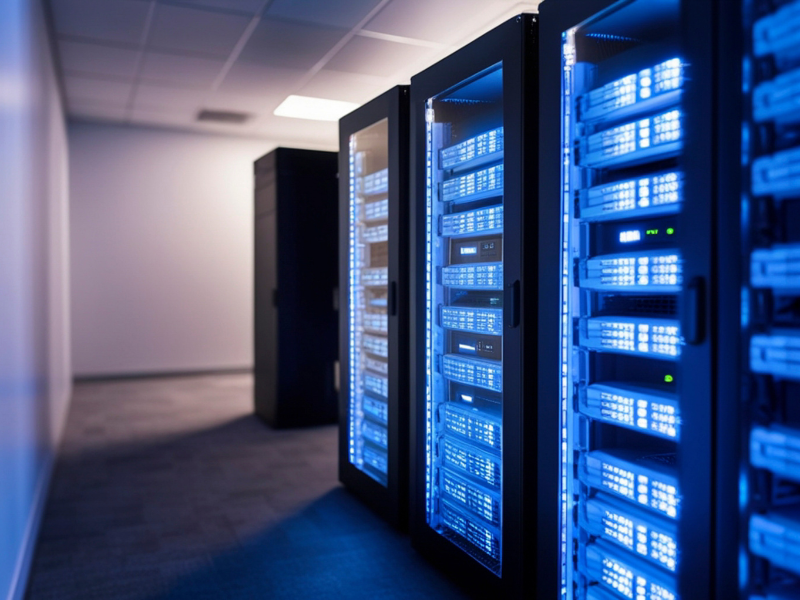
The world's largest technology companies are in a race to build the physical infrastructure of Artificial Intelligence (AI) and the single biggest constraint is electricity. Reliable, abundant, uninterrupted electricity, delivered at a scale that most countries have never been asked to produce.
Decisions are being made right now about where to site data centres, which countries get the contracts, and which grids get the investment will shape the global digital economy for the next two decades. Nigeria has a seat at this table. The question is whether it will use it.
Why Energy Is the New Oil of the AI Economy
The numbers are staggering, and they are accelerating.
According to the International Energy Agency's (IEA) April 2026 analysis, electricity consumption from data centres globally surged 17% in 2025 with AI-focused facilities growing even faster. By 2030, AI data centre power consumption is projected to triple. The IEA now estimates that data centre electricity use could approach 1,000 TWh or more by end of 2026 roughly equivalent to Japan's entire annual electricity consumption.
This is not a background infrastructure story. It is a geopolitical and financial one.
Capital markets have already priced this reality in. In the last 2 months, AI has been the dominant driver of equity market performance globally, lifting semiconductor valuations, sustaining the earnings power of the world's largest technology companies, and prompting successive upward revisions to growth forecasts across major economies. The market is not betting on AI as a future technology; it is pricing it as present infrastructure and thisinfrastructure runs on reliable power.
The capital expenditure of just five large technology companies exceeded $400 billion in 2025 and is projected to grow by a further 75% in 2026. Governments of developed nations, acutely aware that energy availability is now a constraint on AI competitiveness, are responding with urgency: investment in nuclear and renewables is accelerating, and energy security has moved from a utility regulation question to a matter of national industrial strategy. A single large-scale AI training facility now requires between 100 MW and 1,000 MW of dedicated power. For context, Nigeria's entire available grid output currently hovers around 5,000 to 6,000 MW against over 13,000 MW of installed capacity.
Nigeria Has Not Been Left Behind. Not Yet.
The narrative that Nigeria is on the outside looking in is, at this moment, wrong. Nearly $1 billion has been committed to next-generation data centreinfrastructure in Nigeria:
• MTN's Genova unit opened the first phase of its AI-ready Sifiso Dabengwa Data Centre in Ikeja in July 2025.
• Equinix is investing $140 million to expand its West African operations.
• Airtel's Nxtra platform is building a $120 million hyperscale facility at Eko Atlantic.
• Kasi Cloud has announced plans for a 100 MW AI campus in Lekki.
Nigeria currently hosts 21 operational data centres representing approximately 15% of Africa's total capacity. If projects in the pipeline proceed as planned, installed IT load could exceed 150 MW by 2027.
The Legal Reforms Have Moved Faster Than Market Execution
This is perhaps the most important point for investors and policymakers to understand, and one that is frequently lost in the noise about Nigeria's energy challenges: across three distinct but interconnected domains, the legal architecture required to host and power world-class AI infrastructure is friendly in Nigeria. The country has not simply kept pace with the regulatory demands of the AI economy, in certain respects, it has made deliberate choices that position it more favourably than many of its peers.
On AI Governance: the absence of restriction is itself an advantage
The European Union's AI Act, arguably the world's most comprehensive AI-specific legislation, came into full force in 2024 and imposes a tiered, compliance-heavy framework on AI developers and deployers, with significant obligations for high-risk systems and extraterritorial reach over any company serving European users. For international operators, navigating the EU AI Act adds material cost, legal complexity, and deployment risk.
Nigeria has taken a deliberately different path. Rather than legislating restriction, it has built an innovation-enabling framework. The National Artificial Intelligence Strategy, launched in 2024 by the National Information Technology Development Agency (NITDA), positions AI as a national development tool across five strategic pillars (infrastructure, talent, adoption, ethics, and governance) with a target of contributing $15 billion to Nigeria's GDP by 2030. Crucially, the strategy adopts a risk-based approach that calibrates regulatory intensity to actual harm potential, rather than imposing blanket compliance obligations that would deter early-stage deployment and experimentation. Nigeria is not building walls around AI. It is building runways.
On Data Governance: clarity without obstruction.
A persistent concern among international operators considering data centre investments in emerging markets is regulatory uncertainty around data. Nigeria has addressed this directly. The Nigeria Data Protection Act 2023, signed into law in June 2023, establishes a comprehensive statutory framework for data protection that is structurally aligned with international standards, including the GDPR. This alignment matters enormously to hyperscalers whose global compliance architectures are built around GDPR-compatible regimes.
The General Application and Implementation Directive issued by the NDPC in March 2025 and became effective from September 2025 operationalises the NDPA with practical precision: it provides binding rules on registration, Data Protection Officers, breach notification, cross-border data transfers, and compliance audit returns, and specifically addresses how the Act applies to large-scale automated data processing, including AI model training and deployment. For a data-intensive business evaluating Nigeria as a base of operations, the GAID answers the questions that previously went unanswered.
On Energy: a market transformed by law
The Electricity Act 2023 represents the most consequential restructuring of Nigeria's power sector in two decades, and its significance for AI infrastructure specifically has been substantially underappreciated.
The old framework under the Electric Power Sector Reform Act 2005 was built around a centralised, federal monopoly model. A single national electricity market, a single transmission company, and a licensing regime that treated all generation the same way regardless of scale or purpose. For a data centre developer needing reliable, dedicated power, that framework offered no viable path.
The Electricity Act 2023 dismantles that architecture entirely. It creates a multilevel electricity market in which states have full constitutional authority to generate, transmit, and distribute electricity within their borders, issuing their own licences to private power producers, operating parallel electricity markets, and setting the regulatory conditions for investment in their territory.
For data centre developers specifically, the Act establishes captive generation (i.e. where a facility generates power exclusively for its own consumption) as a distinct and facilitated regulatory category, separate from the standard generation licensing regime that governs utilities selling power to the grid. The Act materially differentiates the compliance burden applicable to captive projects and further promotes embedded and renewable generation, helping reduce the structural and procedural barriers that previously treated smaller-scale solar and gas self-generation projects more like conventional utility-scale infrastructure.
Taken together, these three frameworks constitute a legal environment that is structurally fit for the AI infrastructure economy.
So What Is the Actual Problem?
The problem is the gap between what the law permits and what the market reliably delivers and the speed at which that gap must be closed.
International hyperscalers and infrastructure investors do not make financial commitments and investment decisions on the basis of what a legal framework permits. They make them based on what a regulatory environment reliably delivers. That distinction is everything.
• Bankable power is not the same as legal power: The deregulation of captive generation is only as valuable as the ecosystem that supports it. Data centre developers need reliable gas supply as well as tight has supply agreements, grid interconnection approvals, and environmental permits that can be sequenced within project timelines acceptable to international lenders. Additionally, Captive generation addresses the immediate power challenge, but transmission infrastructure remains a consideration that serious investors will not overlook.The reliability gap has not yet closed entirely, however, and sophisticated data centre operators evaluating Nigeria will factor that into their redundancy planning and risk pricing. The legal rights exist but the transactional pathway is still being built.
• State-level markets are moving too slowly. The Electricity Act handed states a historic opportunity. Nearly three years later, many remain in the early design phases of their regulatory frameworks. The AI infrastructure window will not wait for committees and law makers.
• Competition is not standing still. Kenya, Egypt, and South Africa are making targeted, well-structured plays for hyperscale data centre investment. They are not offering superior resources; they are offering regulatory predictability. Every month of execution delay in Nigeria is a month in which investment decisions are being made elsewhere.
The Strategic Opportunity Is Narrow but Real
Nigeria enters this race with advantages that most African competitors cannot match: the largest consumer market on the continent, a digital economy generating genuine AI workloads, a gas resource base capable of supplying captive power generation at competitive cost, and, critically, a legal framework that is structurally fit for purpose.
To be fair to the sceptics, the hesitation of global hyperscalers is not irrational. Multiple grid collapses in early 2026, incomplete state-level regulatory frameworks, untested PPA structures, and naira volatility are legitimate commercial concerns, not perceptions to be managed with a brochure. But the question is not whether Nigeria is perfect. It is whether Nigeria's fundamentals are strong enough to justify the work of addressing them. On balance, they are.
What Nigeria needs now is not more reform. It is ruthless implementation of the reform it already has.
That means fast-track licensing corridors for AI infrastructure power projects. It means standardised power purchase agreement frameworks that international project finance lenders will accept at commercial terms. It means proactive state-level action to operationalisecompetitive electricity markets without further delay. And it means deliberate coordination between the data centre sector and the gas commercialisation agenda, including the Nigeria Gas Flare Commercialisation Programme, which represents a ready and underutilised source of captive generation fuel.
A Word to Investors
The legal risk in Nigeria's power sector is lower than it has been in a generation. The execution risk remains real. For investors in digital infrastructure, energy assets, and the legal and financial structures that connect them, the gap between legal permission and operational certainty is precisely where value is created, or lost.
The AI gold rush is powered by energy. Nigeria has the law, it has the gas, it has the market; what it needs now is speed.
To download the PDF version of the article, click here
*This article is for informational purposes only and does not constitute legal advice. For enquiries, please contact info@kietlaw.com